


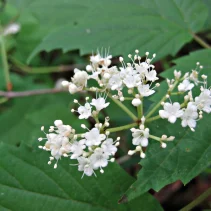
A dainty, seemingly delicate vine. Looks can be deceiving, and P. lutea is probably the most cold-hardy of the Passionflowers. They are slow to start in colder regions, not emerging from the soil in our plantings until late June. They vigorously climb plants that have already begun to establish themselves for the year with the help of their tendrils and in the course of a month can reach their full height for the year. The three-lobed leaves are attractively dappled with light colored splotches. They are naturally found in moist woods and thickets in their native range, often near waterways. The exotic flowers are yellow-green and about ½” across. The term “Passionflower” and genus name Passiflora are derived from the Italian word “passio,” meaning suffering – a reference to the cross-shaped stamens at the center of the flowers.
Flowers are edible raw or cooked and make for an eye-catching garnish in a salad. The small black fruits, while reportedly edible, are not tasty like other members of this genus and are better suited for making natural dyes. The plant is visited by many types of pollinators and is a host plant for several Butterfly species. Above 40°N latitude, the seasonal daylight hours are too short for this plant to reliably produce fruits, and flowering time may also be reduced compared to more Southerly regions. The plant is considered endangered in PA.
Plant in full to part sun. Prefers moist, well-drained soil. Mulch for winter in Zone 5, at least until well established. Tolerates both acidic and alkaline soils.
| Light Prefrences | Sun |
|---|---|
| Zones | Zone 10, Zone 5, Zone 6, Zone 7, Zone 8, Zone 9 |
Be the first to review “Passiflora lutea – Yellow Passionflower”
Related products

Attracts Wildlife


Attracts Wildlife


Drought Tolerant


Attracts Wildlife

Edible Fruit

Reviews
There are no reviews yet.