


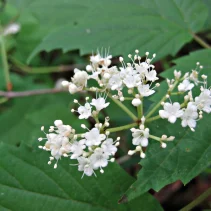
Often found in the understory of Northeastern woodlands, especially along water ways, this native Nettle is considered by many to be the best for eating. Nutritious and tasty, the young shoots in spring or tender growing tips later in the season make a fine addition to soups or stews. The plant is armed with stinging hairs which can cause intense itching, albeit usually of short duration. Light cooking quickly inactivates the stinging hairs. One can generally handle the plants, or cuttings from them, by carefully grasping the leaves, which are largely devoid of stinging hairs. Gloves can be helpful, also. The stingers from this species are much less numerous than those of Common Stinging Nettle (Urtica dioica). Aside from the edible qualities, Wood Nettle is also rather ornamental, with large, crinkly, heart-shaped leaves. The foliage is typically found only high up on the stem, giving an appearance similar to a miniature tree. A very durable cordage can be obtained from the plant stalks. The plant has medicinal properties and is occasionally described in herbal medicine texts, although not nearly as much as U. dioica.
The neon green flower spikes persist from May to June. These plants will spread in a clumping fashion to form small colonies. They are are self-fertile and will reseed if the conditions are right.
Prefers partial sun to nearly full shade. Best in moist, rich, well-drained soil. Tolerant of sandy soils and loose clay.
| Light Prefrences | Partial Shade, Shade, Sun |
|---|---|
| Soil Type | Moist Soil |
| Zones | Zone 3, Zone 4, Zone 5, Zone 6, Zone 7, Zone 8, Zone 9 |
Be the first to review “Laportea canadensis – Wood Nettle”
Related products

Attracts Wildlife

Attracts Wildlife


Edible Fruit



Edible Plants

Attracts Wildlife

Attracts Wildlife
Reviews
There are no reviews yet.