


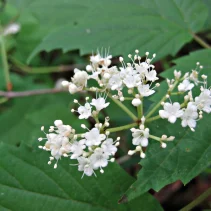
General Information: An exceptionally beautiful small tree grown from seed collected around our farm. Resembling our native Flowering Dogwood, Cornus florida, in general size and shape with a pleasing tiered structure, horizontal branches, neat foliage, and year-round interest. The showy white flowers resemble those of our native Dogwood, however they emerge after the tree is in full leaf. A mature specimen in flower is a glorious sight, but the petal drop period is even more whimsical. The white flowers develop a shell pink color as they age, and persist for weeks into early summer. In late summer and fall, the cherry-shaped fruits appear, looking like bright red ornaments dangling all over the tree. Each fruit has an exotic appearance that tends to inspire awe in those who have never seen one. A tree laden with ripe fruit is so attractive that it is difficult at times to decide whether the tree is more ornamental when in flower or in fruit. Fall leaf color can be scarlet to burgundy, a true stand-out even among the rest of the vastly colorful New England fall foliage. The mottled bark patterns and branch shapes catch snow in intricate ways in winter. Kousa Dogwood is equally at home as a landscape specimen in a quiet neighborhood as they are on our farm.
Edible Qualities: The fruits are sweet, custardy, and a favorite “edimental” among permaculturalists as well. They are also enjoyed by wild birds. We have noted flavor distinctions and size variations from all of the seed-grown trees we have planted out at the farm. The fruits are always good, but it’s a mystery just how sweet or large they will get until the fruits set! The seeds within the fruit are very hard, and while they are produced in great numbers, we have not seen any volunteer Kousa Dogwood trees on our farm. They require very specific conditions in order to germinate. The young leaves in spring are also edible when cooked.
Cultivation Details: This plant is self-fertile. Fruits will set with only one plant present. These are seed-grown selections with the general traits of the species, not named varieties with specialized characteristics. Consider Cornus kousa for planting near livestock. Poultry benefit especially from this tree. The leaves and flowers produce litter for them to scavenge bugs in. Each fruit produced in fall is also devoured, providing nutrients from the rind and pulp and grit in the form of the hard seed. Ruminants can graze on the low-hanging twigs and leaves. The wood of the tree is very strong and suitable for making handles and mallets. Cornus kousa is also considered more cold hardy and more resistant to pests and diseases than the native Flowering Dogwood. Makes an excellent specimen plant.
Growing Requirements: Plant in full to mostly full sun. Plants in partial shade may show reduced flowering or fruiting. Tolerates most soil conditions. Prefers moist soils. Especially tolerant of heavy clay. Low-maintenance. Suitable for mildly acidic, neutral, and mildly alkaline soils.
| Size | 12-24", 2-3', 3-4' |
|---|---|
| Animals Attracted | Attracts Hummingbirds |
| Light Prefrences | Partial Shade, Sun |
| Zones | Zone 5, Zone 6, Zone 7, Zone 8 |
Be the first to review “Cornus kousa – Kousa Dogwood; Asian Flowering Dogwood”
Related products


Attracts Wildlife

Attracts Wildlife


Attracts Wildlife

Attracts Wildlife


Attracts Wildlife

Attracts Wildlife
Reviews
There are no reviews yet.