


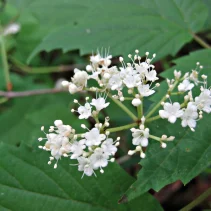
General Information: The scalloped leaf detail, and yellow flower spikes of Prairie Alumroot create a fantastic combination in many settings. They complement closely related horticultural collections such as Coral Bells (Heuchera spp) and Foam Flower (Tiarella spp). As prairie natives, these plants are adaptable, tough, and well-suited to grow in a wide range of conditions. They are found in their native habitat in diverse conditions, ranging from open prairie to rock outcrops to semi-shaded woodlands. The foliage emerges in Spring with an interesting wavy pattern and minute hairs which collect dew drops. During June and July the plant is in flower, sending up leafless spikes of small yellowish, green, and purplish flowers that form a wonderful backdrop when planted en masse. These flower spikes persist until the fruits form and their modest appeal lasts throughout the growing season. During fall, variations of red sometimes fill the leaves. The plant is semi-evergreen, and in warmer regions the foliage can persist until spring, endowing bursts of color on the drab winter landscape. The plant attracts pollinators during bloom and birds are attracted to the seed heads during the winter. The plant has been used medicinally by Indigenous Peoples.
Cultivation Details: Numerous cultivars of this plant exist, but this is the straight species. Perfect for tough shady spots that don’t receive a lot of moisture. Prairie Alumroot is a clumper, and plants do not spread laterally at the root. Under ideal conditions, the plants can spread by seed, but they are typically slow to develop, thus their spread is easy to control. Growers who do not wish for this plant to spread by seed can deadhead the spent flowers. Deadheading may encourage longer bloom time. If spread is desired, mature plants can be lifted in early spring and divided at the crown. Ideal for borders, slopes, containers, rock gardens, foundation plantings, mass plantings, prairie restorations, woodland gardens, pathways and walkways, or as a garden specimen. Consider pairing with other selections from our “Shade,” “Flowers,” or “Perennials” categories.
Growing Requirements: Plant in full to part sun. Prefers partial shade in hot, humid regions. Prefers full sun in regions with cold winters. Prefers well-drained soils. Uniquely tolerant of shady, dry soils. Adaptable to a range of moisture conditions and soil types. Prefers rocky soils. Tolerates sandy, loamy, and clay soils. Suitable for mildly acidic, neutral, and mildly alkaline soils.
Be the first to review “Heuchera richardsonii – Prairie Alumroot”
Related products


Edible Fruit


Attracts Wildlife


Drought Tolerant

Attracts Wildlife

Attracts Wildlife
Reviews
There are no reviews yet.