


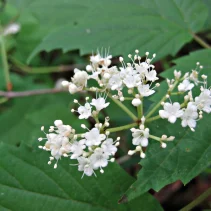
General Information: While the common names Hearts-A-Bustin’ and Strawberry Bush allude to a great plant, more exciting than the plant’s common names are the fall-season fruits. This native resident of moist areas produces inconspicuous flowers in spring which eventually turn into very interesting, knobby, crimson-colored fruits. When the fruits split open, they reveal the equally eye-catching red seeds. In fall, the foliage of this plant transitions from lush green to fiery red. In recent years, Strawberry Bush has been of increased importance in the nursery trade as a native alternative to the invasive Burning Bush (Euonymous alatus). These two closely related plants share the characteristic ornamental fall foliage, however Strawberry Bush is native to the US and does not spread unchecked into wild areas like Burning Bush. Looking for something unique to add to your landscaping this year? Look no further than Strawberry Bush!
Cultivation Details: This plant is self-fertile, (only one plant is required to produce fruit). Consider planting Strawberry Bush as a specimen plant, or along foundations, roadsides, and fences. As a species that thrives in partial to full shade, Strawberry Bush is an excellent choice along north-facing walls. This plant can also be used in a living bird feeder garden, as well as for invasive species replacement. While the fruits of this plant are attractive, and the term “Strawberry Bush” implies edibility, this plant is toxic if consumed in large doses, and is not considered edible. The fruits have been documented as being used medicinally by Indigenous Peoples. We recommend keeping young plants protected (from deer browsing) for several seasons until they become established enough to rebound after heavy browsing. This species has survived for many years on our farm in Zone 6a with some protection from harsh winds (near a foundation).
Growing requirements: Prefers moist, rich soils in part sun or part shade, dappled shade is ideal. Tolerates almost full shade, but will not flower or fruit well without some sun exposure. Plants will do well in moist soils rich in organic matter. Tolerates clay and dry soils. Prefers consistently moist soils, i.e. forest or stream bank conditions, but does not tolerate standing water or flooding. Suitable for mildly acidic, neutral, and mildly alkaline soils. In optimum growing conditions plants will naturalize, but they are not considered invasive. They will spread by rhizomes, and stems will root at the nodes where they touch the ground
Be the first to review “Euonymous americanus – Hearts-A-Bustin’; Strawberry Bush”
Related products


Attracts Wildlife


Attracts Wildlife


Attracts Wildlife

Attracts Wildlife

Attracts Wildlife
Reviews
There are no reviews yet.