


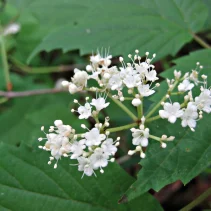
General Information: An ornamental and edible native Onion that checks all the boxes – beautiful, pollinator-friendly, and edible! The skinny tubular leaves of Nodding Onion emerge in early spring, followed by their namesake nodding flower heads from June through August. Each flower head consists of a large globe-like collection of small white to purple flowers. On their own, the flowers give off a light floral scent, but once any part of the plant is crushed or bruised, they let off a strong Onion scent. Like other Onions and their relatives, the above ground portions of the plants go dormant once they are done flowering, leaving behind a papery seed cluster with numerous black triangular seeds. The plant can reseed in favorable conditions, but they are not known to be very weedy or troublesome. They also naturally divide at the bulb after establishment, leading eventually to small colonies of this lovely species! Many pollinators, including Hummingbirds, are known to visit the flowers, and the leaves are a host for Hairstreak Butterfly Caterpillars. These plants have been used medicinally by Indigenous Peoples within their native range.
Edible Qualities: Similar to cultivated Onions or Wild Leeks, but with a much smaller bulb and a much stronger flavor. Every part of the plant is edible and will impart an Onion flavor to a dish. This species is said to be much more well-suited as a seasoning, making an ideal Onion powder from the dried and pulverized bulbs. The leaves can be utilized just like Green Onions or Chives. The flowers, with a bit of nectar, have a sweet Onion flavor and make an amazing garnish.
Cultivation Details: This species is self-fertile. Only one plant is required to produce seeds. Nodding Onions are well-suited for regular garden soils and make a perfect companion plant. They are especially helpful to plant near perennials that are prone to troublesome insects, as the chemicals Onions exude can repel garden pests. These plants also tolerate container growing quite well and can be added to large potted collections or grown individually. A fantastic addition to cottage gardens, prairie restorations, rewilding projects, native plant gardens, food forests, pollinator gardens, mass plantings, or as a garden specimen.
Growing Requirements: Plant in full sun to partial shade. Prefers partial shade in hotter regions. Prefers moist, well-drained soils. Uniquely tolerant of clay, sandy, and gravelly soils. Most successful in high organic matter soils, or when the native soil is well mulched. Suitable for neutral and mildly acidic soils.
Fun Facts: The city of Chicago took its name from the Potawatomi word “Chicagou,” meaning Wild Onion, referring to these plants and their relatives which once grew there so abundantly that the area smelled like Onion!
Be the first to review “Allium cernuum – Nodding Onion”
Related products

Attracts Wildlife


Attracts Wildlife

Attracts Wildlife

Attracts Wildlife


Edible Fruit

Edible Fruit
Reviews
There are no reviews yet.